Saul Pickering keeps a tin of Faber-Castell 9000 pencils, grade HB, on the windowsill above his reading chair in Stoke Newington. The tin once held shortbread. There are eleven pencils in it at any given time.
He sharpens them with a small brass Möbius and Ruppert sharpener, and he uses them, almost exclusively, for the marking of books.
He does not mark every book. He marks the ones he intends to keep, which is most of them, and he marks them in a particular way that has, over the years, become a household practice.
The marks are small. A vertical line in the margin for a sentence he wishes to find again. A small x at the bottom of a page he wishes to return to. A circled page number on the inside back cover for the page that contains the argument of the book, if such a page exists.
He does not underline. Underlining, he says, is a form of decoration. It tells the future reader nothing except that the past reader was in the room.
He does not write in ink. Ink is a declaration. It says: my reading of this sentence is final. Pencil says: my reading of this sentence is provisional, and may be erased by the next reader, who may be me.
This second part is important. The reader who returns to a book five years on is not the same reader. The pencil mark is a kind of letter to that later self, and it is courteous to leave the later self the option of disagreement.
Pickering's argument is not that everyone should mark books. He knows readers, some of them excellent, who keep their books clean as a matter of principle. He has no quarrel with them.
What he is arguing for is the kind of attention that pencil-marking demands, which is the willingness to interrupt one's own reading in order to register that one is having a thought.
This interruption is, in his view, where the reading actually happens.
A book read without any interruption is a book one has skimmed past. A book read with constant interruption — every sentence marked, every page dog-eared — is a book one has not allowed to breathe. The pencil, used sparingly, produces the right interval.
He estimates that he makes between four and twelve marks per hundred pages of serious prose, and somewhere between zero and one mark per hundred pages of light fiction. The variation is, he says, the point.
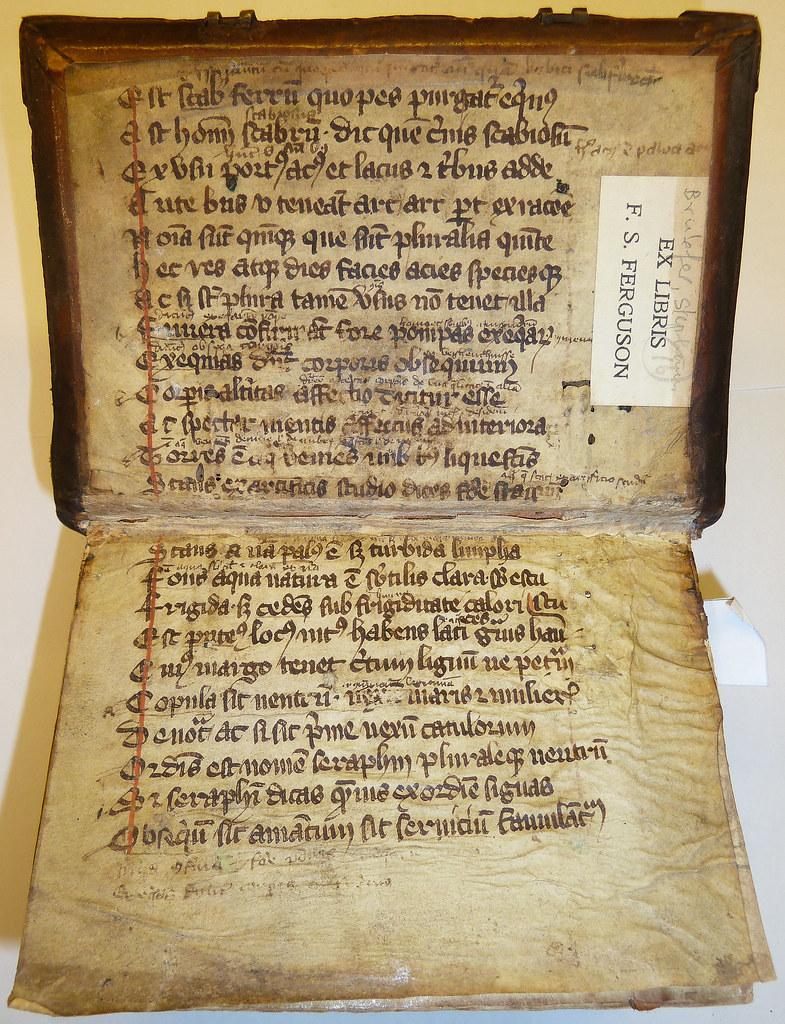
There is a related practice, which he learned from his graduate supervisor at Cambridge in 1996, of writing on the front endpaper a personal index of the marks one has made. Page 47, the bit about the father. Page 119, the wonderful sentence about snow. Page 226, the argument one disagrees with.
This personal index turns a book into a usable object. It is the difference between a book one has read and a book one can return to.
Pickering has, in his own library of about 4,200 volumes, perhaps eight hundred books with such endpaper indexes. They are the books he goes back to. The others sit on the shelves and do their other work, which is the work of having been read.
The objection most often raised against pencil-marking is that it ruins the resale value of the book. Pickering's answer is brisk. He does not sell his books. The people he leaves his books to will not sell them either. The book is not, in his house, an investment.
A second objection, more interesting, is that the marks of a previous reader colour the reading of the next. This is true, and he concedes it. He has a friend in Glasgow who refuses to read any book that has been marked by anyone but herself.
He understands the position. He does not share it. The marks of a previous reader are, he finds, a kind of company in a long book. They are a reminder that one is not the first reader, and one will not be the last, and that the sentence one is presently considering has been considered before.
He has, among his books, a 1958 Penguin edition of Middlemarch that belonged to his mother, who marked it in the same way he now marks books, with small vertical lines in the margin and no other commentary. He has read the book three times. He reads, in some sense, alongside her.
The practice is, in this way, a small inheritance. It does not require an heirloom library. A single annotated paperback, left to a son or a niece, is enough.
Pickering keeps his pencils sharp because the marks should be small. He uses a soft eraser, kept in the same tin, because the marks should be reversible. He does not press hard, because the page is not his.
It is, he says, on loan from the next reader, who may or may not exist, and to whom one owes a legible record of one's own attention.
Filed under