Skein Press, founded in 2023 in a one-room office on Pope's Quay in Cork, has published its first hardback. The Coracle-Maker's Daughter, by Aine Halloran, came out on 2026-04-09 in an edition of 1,800 copies. It is a debut novel by a thirty-four-year-old former civil servant from Tralee, and it is the kind of book that a small press takes a risk on because no large one will.
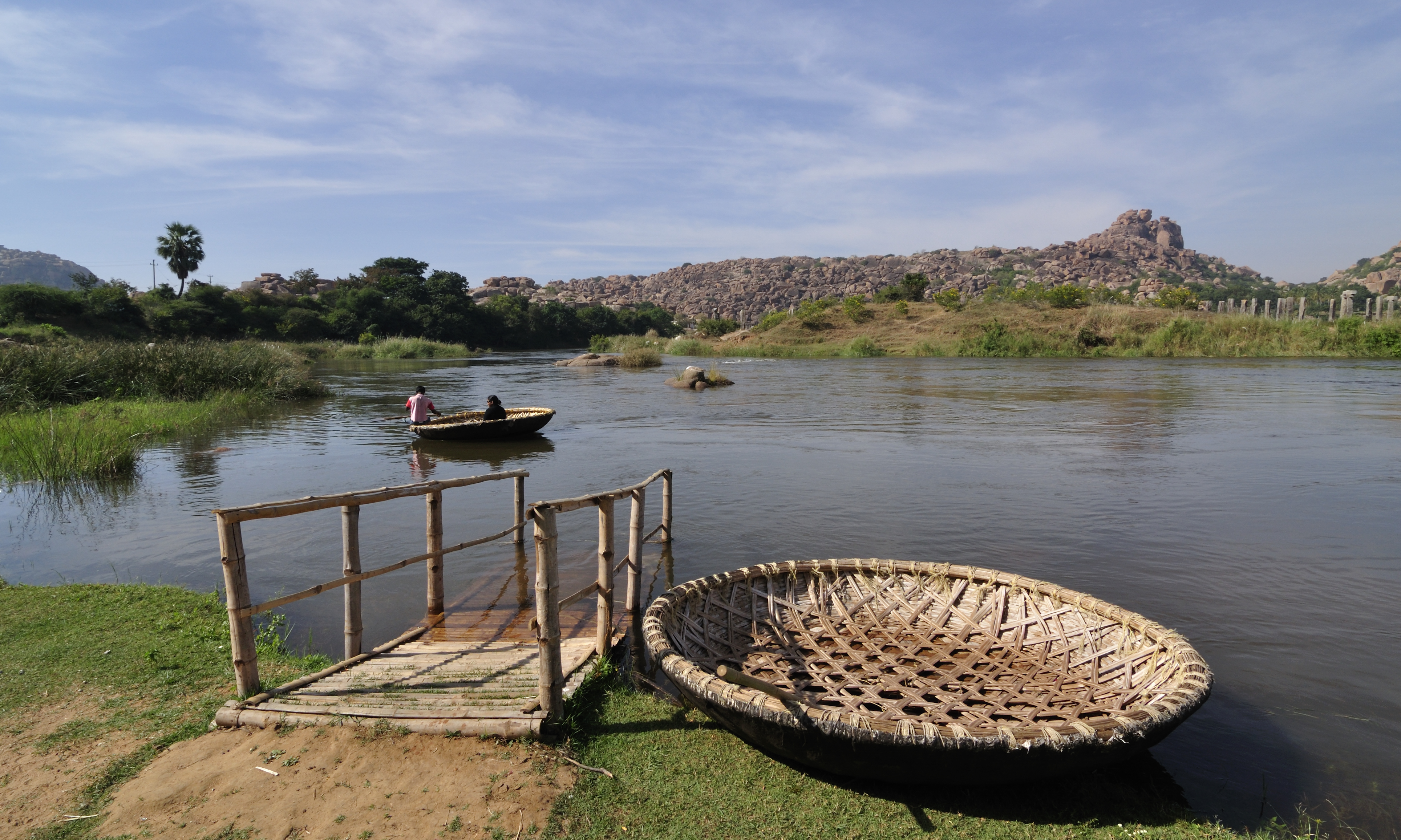
The novel is set on the lower River Teifi, between Cenarth and Cardigan in west Wales, from 1971 to 1988. Its protagonist is Bethan Llwyd, the daughter of one of the last licensed coracle fishermen on that stretch of the river. The coracle, a one-person basket boat covered in canvas and tar, has been fished on the Teifi for at least nine hundred years.
By 1971, when the novel opens, the Welsh Office had reduced the number of net licences on the Teifi to twelve. By the time the novel ends, in the summer of 1988, only four were active. Halloran has done the research. A two-page note at the back of the book lists the parish records and the National Library of Wales files she consulted.
The book opens with Bethan at six, watching her father, Geraint Llwyd, tar a new coracle in the shed behind their cottage at Llechryd. The scene is unhurried. Halloran spends six pages on the smell of the tar, the consistency of the canvas, the shape of the willow frame. The reader who is impatient will close the book at page nine.
The reader who stays is rewarded slowly. Halloran's gift is for the small repeated gesture, and Bethan grows up in front of us through a thousand of them: the way she learns to hold the paddle, the way she learns to count salmon, the way her father will not let her use his coracle but builds her a smaller one, in 1976, that she keeps for the next twelve years.
The press release calls the novel "luminous." It is not luminous. It is patient, which is a rarer thing. The prose is plainer than the publisher's copy suggests. The sentences are mostly short. The dialogue, of which there is little, is rendered in standard English with the occasional Welsh word left untranslated.
This is a choice. Halloran, who learned Welsh at evening classes in Dublin between 2018 and 2022, is careful about the language. She uses Welsh for the names of tools, for the names of stretches of the river, for the names of weather. She does not use it for emotion. The effect is that the river is more present, in Welsh, than the people are.
The novel's first crisis is the construction of the Llyn Brianne reservoir, completed in 1972 on the headwaters of the Tywi rather than the Teifi. Halloran knows this. She uses Llyn Brianne as a piece of news that arrives at the kitchen table, an event in the wider catchment that signals what is coming for the Teifi too.
The second crisis is the National Rivers Authority's 1984 review of the licence system. Geraint loses his licence in 1985, when Bethan is twenty. He continues to fish without one for two more seasons, and the novel handles this with the right kind of restraint. There is no melodrama. There is a fine of seventy-five pounds, paid in cash at Cardigan Magistrates Court in October 1986.
The book's emotional centre is not the loss of the licence but the slow estrangement between Bethan and her mother, Ceri, a primary-school teacher who has never approved of the coracle life. Their final conversation, on the bridge at Cenarth in May 1988, runs to two and a half pages. It is the only place in the novel where Halloran allows herself a metaphor, and she earns it.
Skein Press has produced the book with care. The cloth is a green that matches the silt on the lower Teifi at low water. The endpapers reproduce a 1962 Ordnance Survey map of the river between Cenarth and St Dogmaels. The type is Bembo, set generously, and the book is sewn rather than glued.
The cover image is a photograph by the Cork-based photographer Sinéad Aherne, taken at Cilgerran in November 2024. It shows a coracle, upside down, leaning against a stone wall. The image was commissioned for the book.
There are flaws. The middle of the novel, between 1978 and 1982, sags. Halloran has chosen to render Bethan's adolescence in a series of summer scenes, and the structural decision means that whole school years drop out. A reader will not feel he knows the teenage Bethan as well as he knows the child or the young woman.
There is also a subplot involving Geraint's brother Idris, a hill farmer in the Cambrian Mountains, that does not earn its space. Idris appears in four chapters and dies, off-page, in 1984. The chapters set in his farmhouse at Strata Florida are well written but they belong to a different book.
Halloran has said, in a short interview in The Irish Times on 2026-04-12, that she cut about thirty thousand words from the manuscript in the final year of editing with Niamh Boyce, Skein's commissioning editor. One suspects another five thousand should have come out of the middle.
Even so, this is a confident debut. The first chapter and the last chapter are as well made as anything published in Irish fiction this year. The river is rendered as a character without being personified, which is a difficult thing to do.
Skein Press deserves attention for taking the book on. The press is run by Boyce and the designer Marian O'Sullivan out of the Pope's Quay office, with one part-time publicist and a freelance distribution arrangement through Gill Books. Their list is small: four titles in 2025, six planned for 2026.
The hardback is priced at sixteen euros, which is below cost for a sewn binding in a print run of this size. Boyce told this reviewer, in a phone call on 2026-04-22, that the press has priced the book to be bought rather than admired.
A paperback is planned for 2027. A Welsh translation, by Manon Steffan Ros, has been commissioned and will appear from Y Lolfa, also in 2027.
The Coracle-Maker's Daughter is not the book the press release describes. It is a quieter, less marketable, more durable book. It is the kind of debut that a careful reader will remember a decade from now, when Halloran has published two or three more novels and the early one is the one people go back to.
Readers who want a fast novel about a vanishing trade should look elsewhere. Readers who are willing to spend an afternoon learning how a coracle is built will find that the afternoon was not wasted.